Currency
 AED
AED
 AFN
AFN
 AMD
AMD
 ANG
ANG
 AUD
AUD
 AWG
AWG
 AZN
AZN
 BAM
BAM
 BBD
BBD
 BDT
BDT
 BIF
BIF
 BND
BND
 BOB
BOB
 BSD
BSD
 BWP
BWP
 BZD
BZD
 CAD
CAD
 CDF
CDF
 CHF
CHF
 CNY
CNY
 CRC
CRC
 CVE
CVE
 CZK
CZK
 DJF
DJF
 DKK
DKK
 DOP
DOP
 EGP
EGP
 ETB
ETB
 EUR
EUR
 FJD
FJD
 FKP
FKP
 GBP
GBP
 GMD
GMD
 GNF
GNF
 GTQ
GTQ
 GYD
GYD
 HKD
HKD
 HNL
HNL
 HUF
HUF
 IDR
IDR
 ILS
ILS
 ISK
ISK
 JMD
JMD
 JPY
JPY
 KES
KES
 KGS
KGS
 KHR
KHR
 KMF
KMF
 KYD
KYD
 KZT
KZT
 LAK
LAK
 LBP
LBP
 LKR
LKR
 MAD
MAD
 MDL
MDL
 MKD
MKD
 MMK
MMK
 MNT
MNT
 MOP
MOP
 MUR
MUR
 MVR
MVR
 MWK
MWK
 MYR
MYR
 NGN
NGN
 NIO
NIO
 NPR
NPR
 NZD
NZD
 PEN
PEN
 PGK
PGK
 PHP
PHP
 PKR
PKR
 PLN
PLN
 PYG
PYG
 QAR
QAR
 RON
RON
 RSD
RSD
 RWF
RWF
 SAR
SAR
 SBD
SBD
 SEK
SEK
 SGD
SGD
 SHP
SHP
 SLL
SLL
 STD
STD
 THB
THB
 TJS
TJS
 TOP
TOP
 TTD
TTD
 TWD
TWD
 TZS
TZS
 UAH
UAH
 UGX
UGX
 USD
USD
 UYU
UYU
 UZS
UZS
 VND
VND
 VUV
VUV
 WST
WST
 XAF
XAF
 XCD
XOF
XPF
XCD
XOF
XPF
 YER
YER

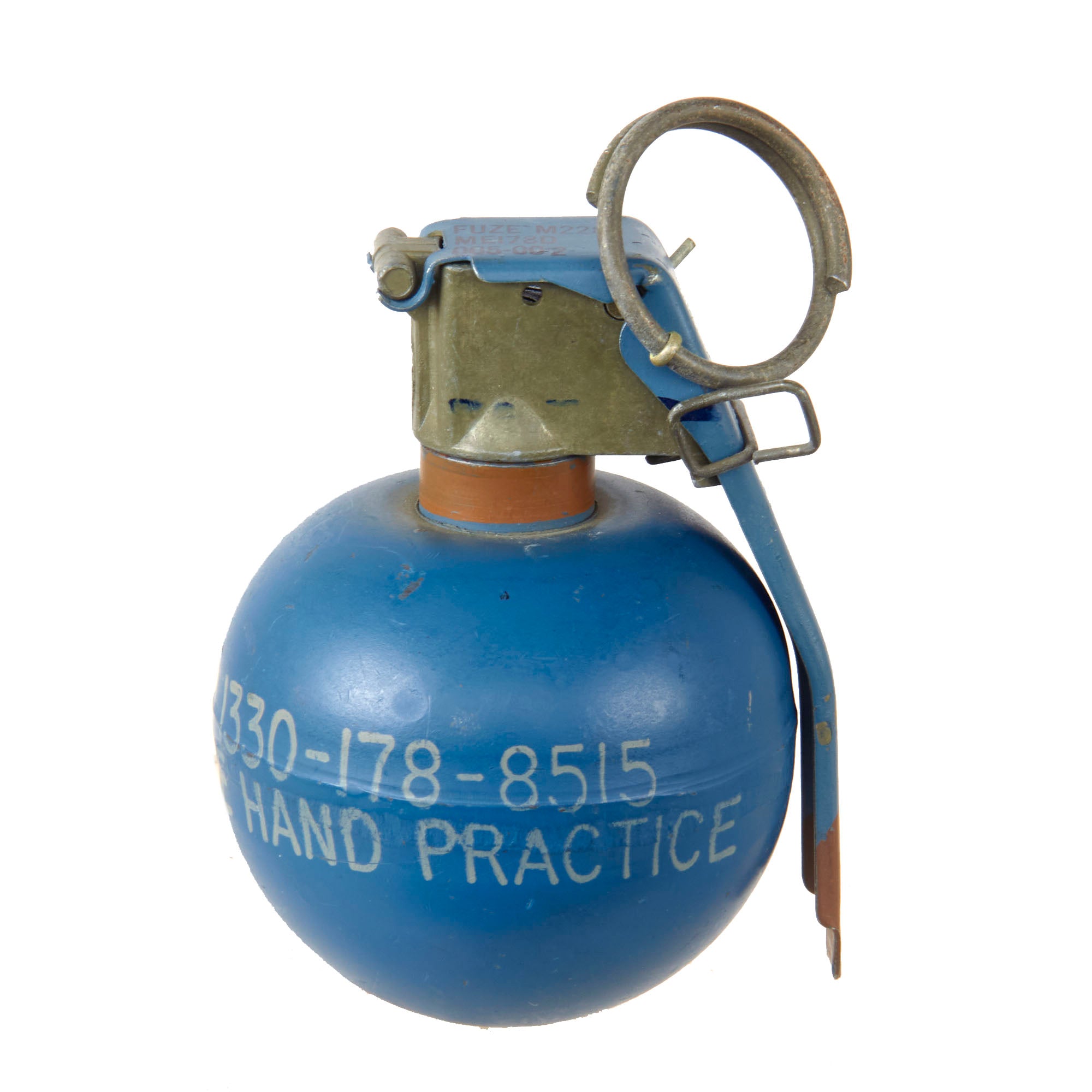

Description
xOriginal Item: Only One Available. Totally inert and demilitarized according to BATF guidelines with hollow body and inert fuse. This grenade cannot be converted to an explosive device and is not available for export.
This is a very nice inert practice example of the rare U.S. M67 Hand Fragmentation Grenade, first fielded during the Vietnam War and still current today. It is marked on the body:
FSN 1330-178-8515
GRENADE HAND PRACTICE
It has an empty detonator factory attached to the fuze, with a hole drilled through the bottom of the detonator to show that it is empty.
Condition is excellent, a great practice grenade.
The M67 grenade has a spherical steel body that contains 6.5 oz (180 g) of composition B explosive. It uses the M213 pyrotechnic delay fuze. The M67 grenade weighs 14 oz (400 g) in total and has a safety clip to prevent the safety pin on the grenade from being pulled accidentally. The safety pin prevents the safety lever, or "spoon" on the grenade from moving and releasing the spring-loaded striker which initiates the grenade's fuze assembly. The M67 is typically known as a "baseball" grenade, because it is shaped like a ball that can be easily thrown. Other variations include the "pineapple" grenade and the World War 2 era "stick" grenade.
The M67 can be thrown 30 to 35 metres (98 to 115 ft) by the average male soldier. Its fuze delays detonation between 4 and 5 seconds after the spoon is released. Steel fragments (not to be confused with shrapnel) are provided by the grenade body and produce an injury radius of 15 metres (49 ft), with a fatality radius of 5 metres (16 ft), though some fragments can disperse as far out as 250 metres (820 ft).


- Choosing a selection results in a full page refresh.